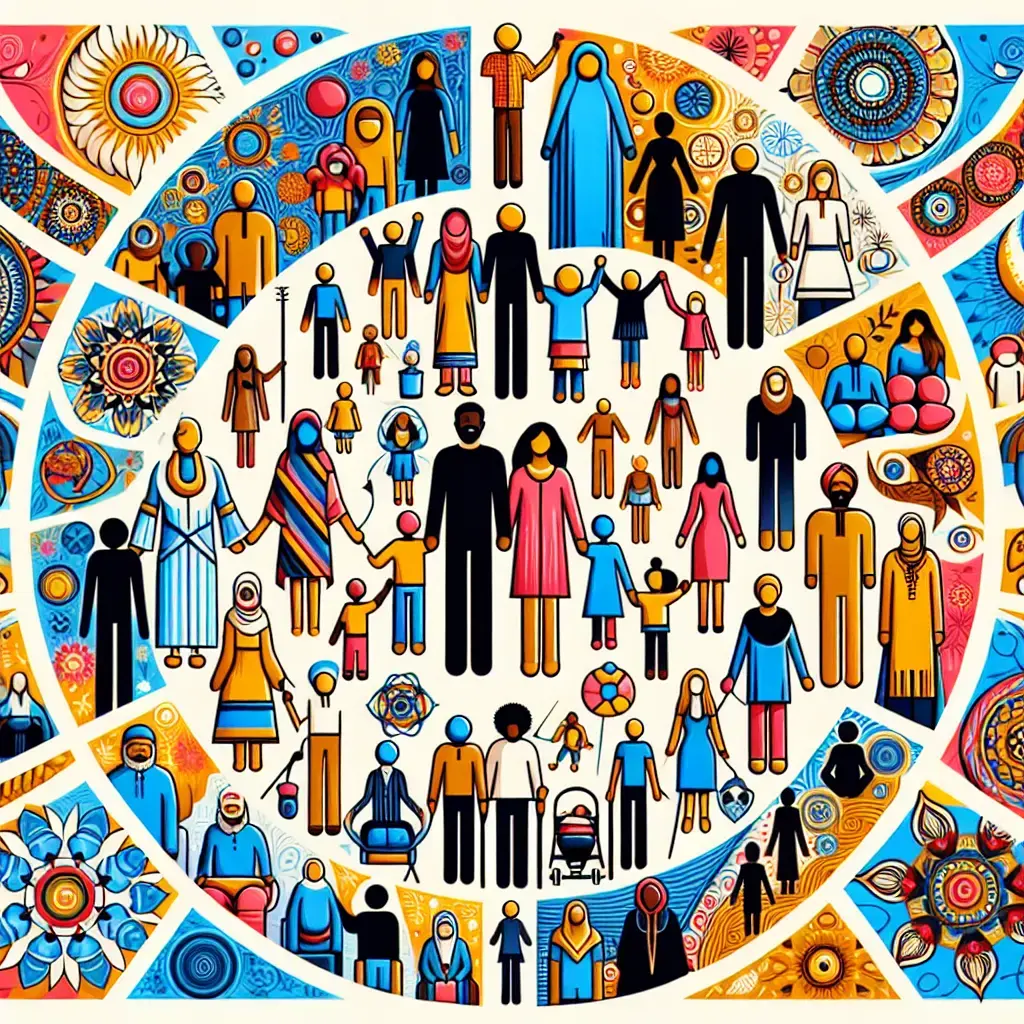
The Evolution of Family Structures Across Different Societies
Family structures have undergone significant transformations throughout history, reflecting a tapestry of cross-cultural diversity and societal change. This exploration into the evolution of family structures reveals how historical family dynamics have shaped the foundations of societies, leading to a fascinating comparison between traditional and modern families. As we delve into societal family changes, we uncover the intricate fabric of family roles transformation, highlighting intergenerational shifts that influence cultural family norms and global family patterns.
The Historical Context of Family Structures
Understanding family evolution history requires an examination of the earliest family systems. The extended family, which included multiple generations living under one roof, was prevalent in many societies. This structure facilitated agricultural lifestyles where larger labor forces were beneficial. Over time, as societies industrialized, there was a notable shift towards nuclear family units—consisting of parents and their children—reflecting a need for mobility and economic adaptation (Smithsonian Magazine).
However, the transition from extended to nuclear family units wasn't universal. In regions like South Asia and parts of Africa, extended family systems remain integral due to cultural family norms that emphasize collective responsibility and support (BBC).
Intergenerational Shifts and Modern Family Models
The 21st century has seen further diversification in family unit variations, driven by intergenerational shifts. Factors such as globalization, technology, and changing gender roles have contributed to new forms of family structures. In urban centers like Berlin, the rise of digital dating platforms signifies a transformation in how relationships are formed, illustrating the intersection of love and technology (Routledge).
Moreover, as highlighted by the American Museum of Natural History's recent repatriation of Native American remains, there is a growing recognition of the importance of cultural heritage and identity in shaping family dynamics (New York Times). This act symbolizes a broader societal impact on families, where respect for ancestral traditions influences contemporary family models.
Cross-Cultural Family Structures: A Comparative Analysis
The comparison of family systems across different cultures reveals a rich tapestry of family structure diversity. In Japan, the concept of 'ie' (household) embodies a traditional system where lineage continuity is prioritized, contrasting sharply with Western individualistic family models (Japan Times).
In North America, recent debates surrounding Vice President Kamala Harris's racial identity highlight how cultural family norms continue to evolve in the public sphere. Her experiences underscore the complexity of cross-cultural family structures and their influence on personal and societal identities (The Guardian).
The Influence of Modern Developments on Family Dynamics
Recent developments in technology and geopolitics also play a crucial role in transforming family roles. Palmer Luckey's Anduril is set to revolutionize defense with its Tesla-style weapons factory. Such advancements prompt questions about the future of familial relationships in societies increasingly driven by technological innovations (CNBC).
Similarly, educational institutions like Arthur Erickson's Museum of Anthropology at UBC provide platforms for learning about diverse cultural legacies, encouraging societal reflection on historical and modern family systems (Vancouver Sun). These institutions foster an understanding of how cultural heritage shapes familial evolution.
The Future Trajectories of Family Systems
As we look towards the future, it's essential to consider how current societal trends will influence changing family models. The ongoing discourse around digital platforms for young conservatives highlights the role of ideological shifts in shaping future family structures (The Atlantic). These platforms suggest a new frontier for family interactions and values dissemination in an increasingly connected world.
Moreover, discoveries like Teotihuacan's 'Pyramid of the Moon' alignment with the solstice sun emphasize how ancient architectural achievements can inspire contemporary understanding of familial roles within societal contexts (Science News).
Conclusion: Navigating the Complex Tapestry of Family Evolution
In conclusion, the evolution of family structures across different societies is a testament to human adaptability and resilience. By examining intergenerational shifts and cross-cultural comparisons, we gain valuable insights into how families have transformed—and continue to transform—in response to changing societal landscapes. As we stand at the intersection of tradition and modernity, it is crucial to embrace this complexity to better understand the future trajectories of family systems.
I invite you to share your experiences and insights on how family dynamics have evolved in your context. How do you perceive the balance between tradition and modern influences within your own family structure? Your thoughts and stories can contribute to a richer discussion on this ever-evolving topic.
Thank you for joining this exploration. Continue to engage with these narratives and reflect on their impact on your life.
Author: Oliver Jennings