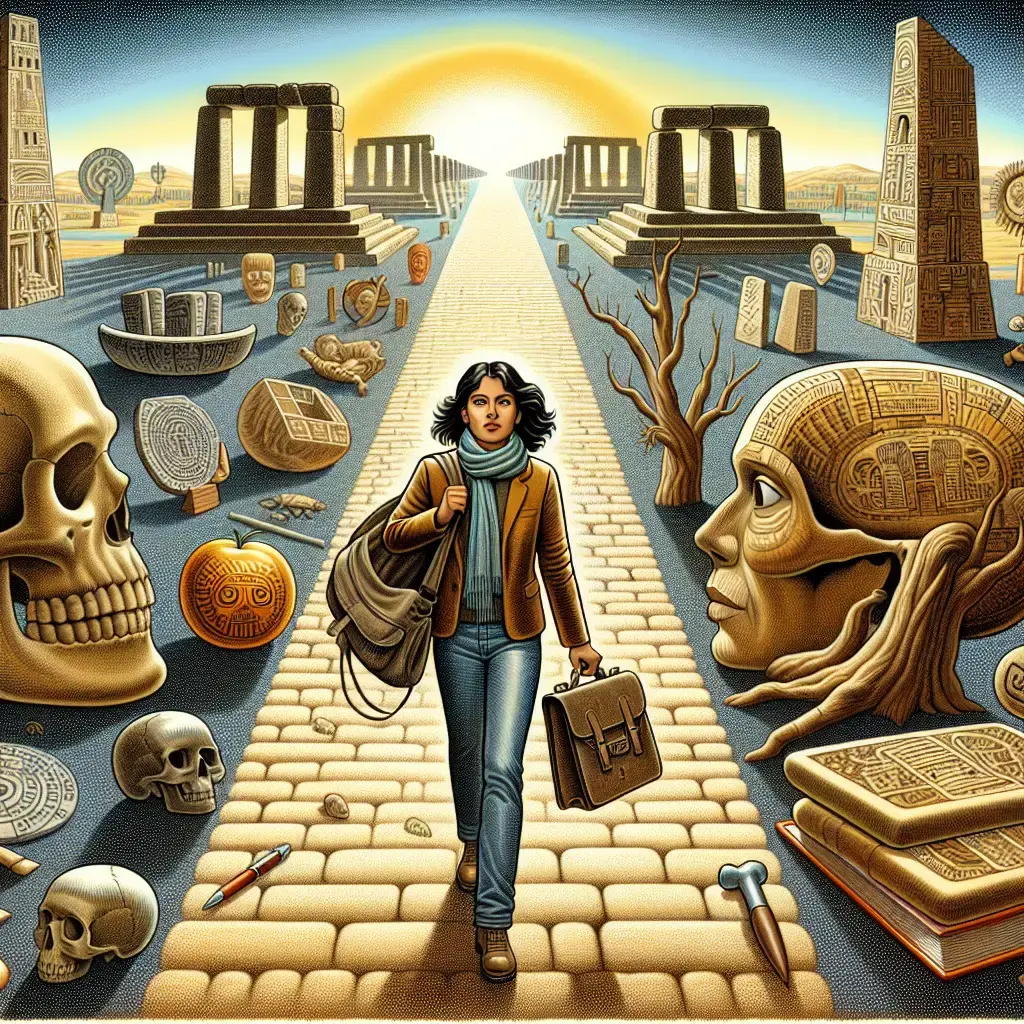
Unveiling the Layers of Cultural Anthropology: Politics, Bones, and the Clash of Perspectives
Cultural anthropology, a field dedicated to understanding the diverse tapestries of human life, is currently at a fascinating yet contentious crossroads. In recent years, this discipline has become a battleground for debates around politics, identity, and scientific inquiry, as explored in an insightful conversation between Elizabeth Weiss and Michael Shermer.
The Politicization of Anthropology
Elizabeth Weiss, a prominent archaeologist, discusses the increasing politicization of anthropology. Her experiences highlight the ways in which external political pressures are shaping the field. One of the most notable controversies discussed is that surrounding the Kennewick Man, a set of ancient remains found in Washington State in 1996. This case ignited a complex debate over the repatriation of remains to Native American tribes, raising questions about ownership and cultural heritage.
Weiss argues that the field is increasingly being influenced by "wokeness"—a term used to describe heightened sensitivity to social and cultural issues. This shift, she suggests, can sometimes overshadow scientific objectivity and hinder the pursuit of unbiased truth. Her perspective invites readers to ponder how cultural considerations and scientific endeavors can coexist without compromising one another.
The Science Behind Bones
In her conversation with Shermer, Weiss delves into the binary nature of sex in bone studies—a subject that has sparked controversy. Bones have long been used to determine sex based on distinct biological markers. However, with current societal shifts toward recognizing gender as a spectrum, this scientific practice has faced scrutiny.
Weiss’s position raises essential questions about how anthropologists can balance scientific rigor with respect for evolving social norms. How can researchers navigate these waters while remaining true to empirical evidence?
The Impact of Cultural Awareness
While the conversation about politicization is critical, it’s also important to recognize the positive impacts of increased cultural awareness within anthropology. By integrating diverse perspectives and respecting cultural contexts, anthropologists can foster deeper understandings of human history and its varied expressions across time and space.
This cultural sensitivity can also aid in correcting historical injustices and empowering marginalized communities. The challenge lies in finding harmony between honoring cultural significance and maintaining scientific accuracy.
Reflections on Anthropology's Future
As we reflect on the insights shared by Elizabeth Weiss, it becomes clear that cultural anthropology is at a pivotal juncture. The field must navigate the intricate web of politics, scientific inquiry, and cultural respect. These elements are not mutually exclusive but rather components of a rich tapestry that can enhance our understanding of humanity.
For those interested in delving deeper into these conversations and exploring Elizabeth Weiss's perspective, you can listen to the full discussion here.
As we continue to explore the vast landscapes of human culture and history, let us do so with open minds and hearts. In recognizing the value of diverse voices and maintaining a commitment to scientific integrity, we can ensure that cultural anthropology remains a beacon of understanding in an ever-evolving world.
Warm regards,
Oliver Jennings